

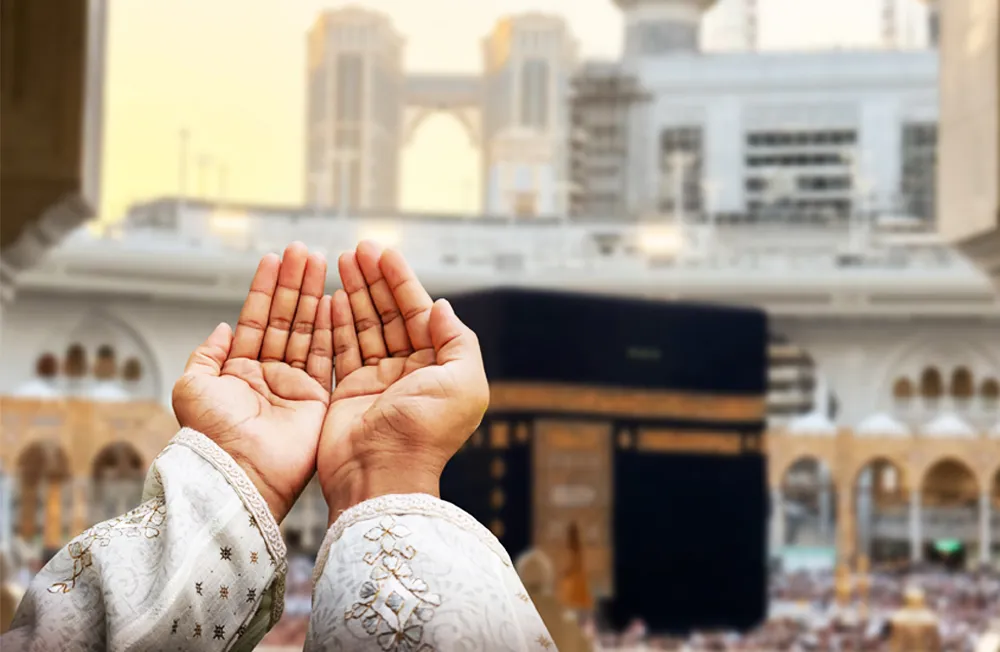
Every Muslim dreams of receiving divine blessings from Allah (SWT), and to that end, they undertake the most significant religious pilgrimages in Islam, Hajj and Umrah. Although both these sacred Islamic journeys share certain rituals, they differ in timing and obligation. In order to perform both these rituals, one must have complete knowledge of the pillars (Arkan). If one pillar is omitted, your pilgrimage will not be complete. Read below to learn about the pillars of Hajj and Umrah.
Table of Contents
ToggleUnderstanding the Pillars of Umrah

Umrah, also known as the minor or lesser pilgrimage, is an act of worship undertaken by Muslims at any time of the year. This journey allows the opportunity to cleanse one’s soul, seek forgiveness, and gain a closer connection to Allah. Learn about the essential pillars of Umrah below:
Ihram (Intention)
Ihram refers to the state of entering a sacred state with the clear intention of performing Umrah. It symbolises humility and equality before Allah. Once in this state, there are certain acts that are forbidden, such as cutting hair, using perfume or engaging in marital intimacy.
Tawaf (Circumambulation)
Pilgrims go circling around the Holy Kaaba seven times in a counterclockwise direction. This act symbolises unity and devotion among the Muslims towards Allah. One must ensure to be in a state of Wudu before performing this ritual.
Sa’i (Walking Between Safa and Marwa)
Sa’i refers to the walking between the hills of Safa and Marwa seven times, referring to the action of Hajar (AS) finding water for her son Ismail. Both of these hills are located within the Masjid al-Haram and require a total distance of about 3.15 kilometres to cover.
Halq or Taqsir (Cutting or Shaving Hair)
The final pillar requires cutting the hair, marking the completion of Umrah. For men, it is recommended to shave their heads, while for women, it is recommended to trim a small portion of their hair.
Understanding the Pillars of Hajj

Hajj, the fifth pillar of Islam, is also a sacred pilgrimage performed annually by millions of Muslims around the globe. It is an obligatory ritual for financially and physically able Muslims to perform this pilgrimage once in a lifetime. Learn about the essential pillars of Hajj below:
Ihram (Intention)
Ihram is the sacred state you enter with a clear intention to perform Hajj, reflecting humility and equality before Allah. In this state, certain actions become prohibited, including cutting hair, applying perfume, and engaging in marital relations.
Wuquf (Standing at Arafat)
Wuquf is the most critical pillar of Hajj, as the pilgrims gather at the plain of Mount Arafat to spend their afternoon in prayer, supplication and reflection on the 9th of Dhul Hijjah. Prophet Muhammad (PBUH) said, “Hajj is Arafat”, as without Wuquf ar Arafat, Hajj is incomplete.
Tawaf (Circumambulation)
Pilgrims gracefully circle the Holy Kaaba seven times in a counter‑clockwise direction, joining a powerful flow of hearts united in devotion to Allah. Each round reflects love, obedience and brotherhood, so approach it in a state of Wudu, present, purified and conscious that you are part of a Hajj answering His call.
Sa’i (Walking Between Safa and Marwa)
Sa’i is the beautiful re-enactment of Hajar’s (AS) steadfast search for water for her son Ismail. As you walk seven times between Safa and Marwa, covering the blessed distance of about 3.15 kilometres in the heart of Masjid al‑Haram, you turn a simple walk into a powerful reminder of tawakkul, sacrifice, and Allah’s mercy.
Halq or Taqsir (Cutting or Shaving Hair)
Complete your Hajj with the blessed final pillar of Halq or Taqsir, which is a moment of renewal and divine acceptance. Men embrace the sunnah by shaving their heads fully, while women trim a small portion of their hair with devotion.
Read Also: Five Pillars of Islam | Types of Tawaf in Islam
Key Differences Between the Pillars of Hajj and Umrah

Here are the key differences between the pillars of Hajj and Umrah.
| Pillars | Hajj | Umrah |
| Ihram | Required | Required |
| Wuquf | Required | Not Required |
| Tawaf | Required | Required |
| Sa’i | Required | Required |
| Halq or Taqsir | Required | Required |
| Timing | Specific days in Dhul Hijjah | Any time of the year, except during the Hajj season |
| Duration | Around 5 to 6 days | About a few hours |
| Obligation | Once in a lifetime (if able) | Not mandatory, yet highly recommended |
Common Mistakes to Avoid During Performing Hajj and Umrah

Pilgrims must avoid certain mistakes to earn the benefits of Hajj and Umrah that are stated below:
- Do not confuse pillars with obligatory acts.
- Do not fail to make a clear intention before starting Hajj or Umrah.
- Failing the time window for Wuquf at Arafat.
- Performing Tawaf incorrectly.
- Performing rituals in the incorrect order.
Read Also: Obligation of Hajj and Umrah
Conclusion:
Both hajj and Umrah are the foundation of the sacred pilgrimage, each carrying profound spiritual lessons. Muslims planning to undertake any of the sacred journeys must be well aware of the pillars to avoid making any mistakes that would render their pilgrimage invalid.
CallforUmrah offers affordable packages for both Hajj and Umrah to help you complete your holy pilgrimage and earn the divine blessing of Allah. Book with us to travel to Saudi Arabia and complete your rituals hassle-free.
FAQs
A pillar cannot be skipped, while an obligatory act, if skipped unintentionally, can be compensated with a sacrifice.
No, Ihram means the intention to begin Hajj or Umrah.
If a pilgrim misses a pillar of Hajj, he/she must perform Hajj again in the following year.
No, it is not mandatory for men to shave their heads to complete Hajj and Umrah, as they can also trim their hair.
Yes, it is possible to perform Hajj or Umrah on behalf of someone else who has passed away or is permanently disabled.
A Muslim can perform Umrah as many times as he wishes, however four times is considered standard.
Hajj is considered more rewarding than Umrah.
Yes, it is necessary to enter Ihram at the Miqat before performing Hajj and Umrah.
Read Also: Difference between Hajj and Umrah


